
Medicine information
Uses & overview
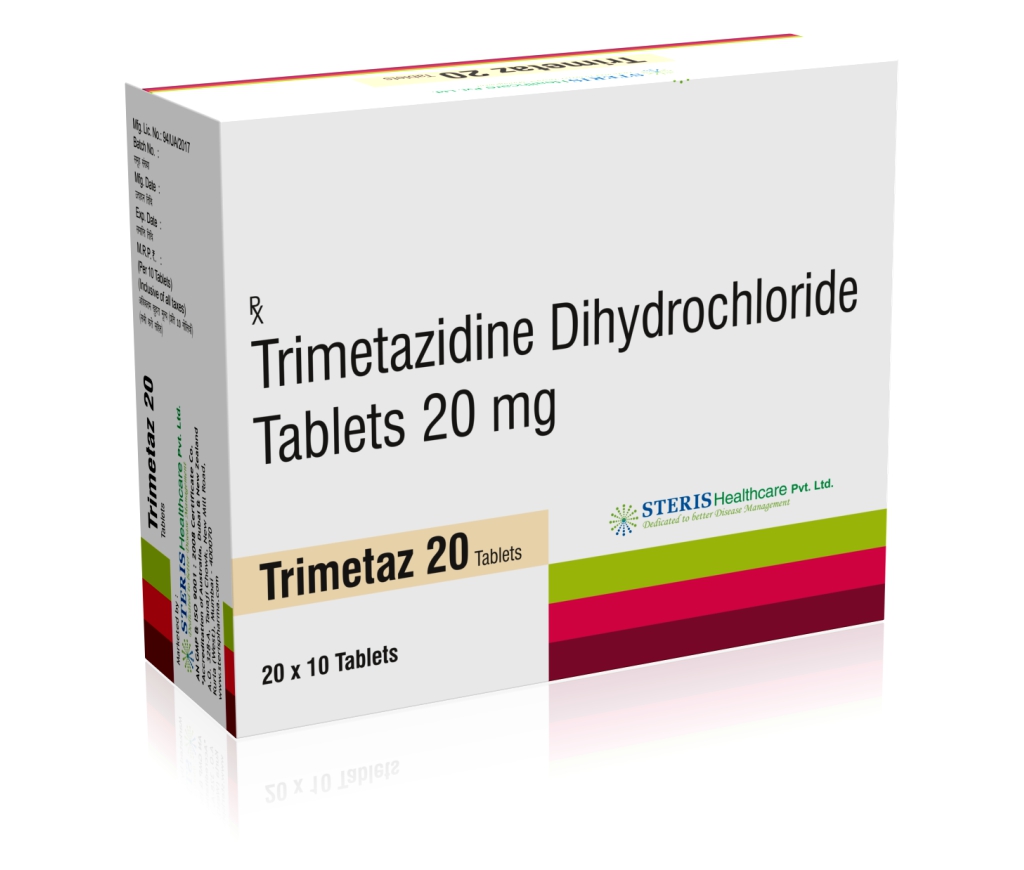
Trimetazidine Dihydrochloride is a medicine prescribed as an add-on treatment for adults with stable angina pectoris. Angina is chest discomfort or pain that occurs when the heart muscle does not receive enough oxygen-rich blood. Trimetazidine works by modifying cellular energy metabolism, helping heart muscle cells use oxygen more efficiently under certain conditions. This medicine may help reduce the frequency of angina episodes and improve exercise tolerance in some patients when other antianginal treatments do not provide adequate symptom control or are unsuitable. It is not intended to relieve sudden chest pain or treat an acute heart attack. Patients experiencing new, severe, or persistent chest pain should seek emergency medical attention. Possible side effects include dizziness, headache, nausea, and stomach discomfort. Trimetazidine may cause movement-related problems, including tremors, stiffness, or difficulty walking, and is generally unsuitable for people with Parkinson's disease or related movement disorders. It also requires caution or avoidance in certain patients with kidney impairment.
How to use
Follow the prescribed dosage: Take the exact dose recommended by your healthcare professional. Immediate-release and modified-release tablets have different dosing schedules, so check the instructions for your specific product. Take it at the recommended time: Follow your prescription and patient leaflet. Some formulations are taken with meals, while dosing frequency varies according to the product strength and release type. Swallow the tablet correctly: Take the tablet with water. Do not crush, chew, or split modified-release tablets unless your pharmacist confirms that your particular formulation allows it. Handle missed doses carefully: If you miss a dose, follow the leaflet or ask your pharmacist for advice. Do not take a double dose to compensate for a missed tablet. Continue other prescribed treatments: Trimetazidine is generally an add-on treatment for stable angina. Do not stop your other heart medicines unless your doctor instructs you to do so. Recognize warning symptoms: This medicine does not treat a sudden angina attack. If chest pain is new, severe, persistent, or accompanied by breathlessness or sweating, seek emergency medical help. Report movement-related symptoms: Contact your doctor if you develop tremors, muscle stiffness, slow movements, balance problems, or difficulty walking. Your doctor may need to discontinue treatment.
Storage
Store in cool and dry place