
Medicine information
Uses & overview
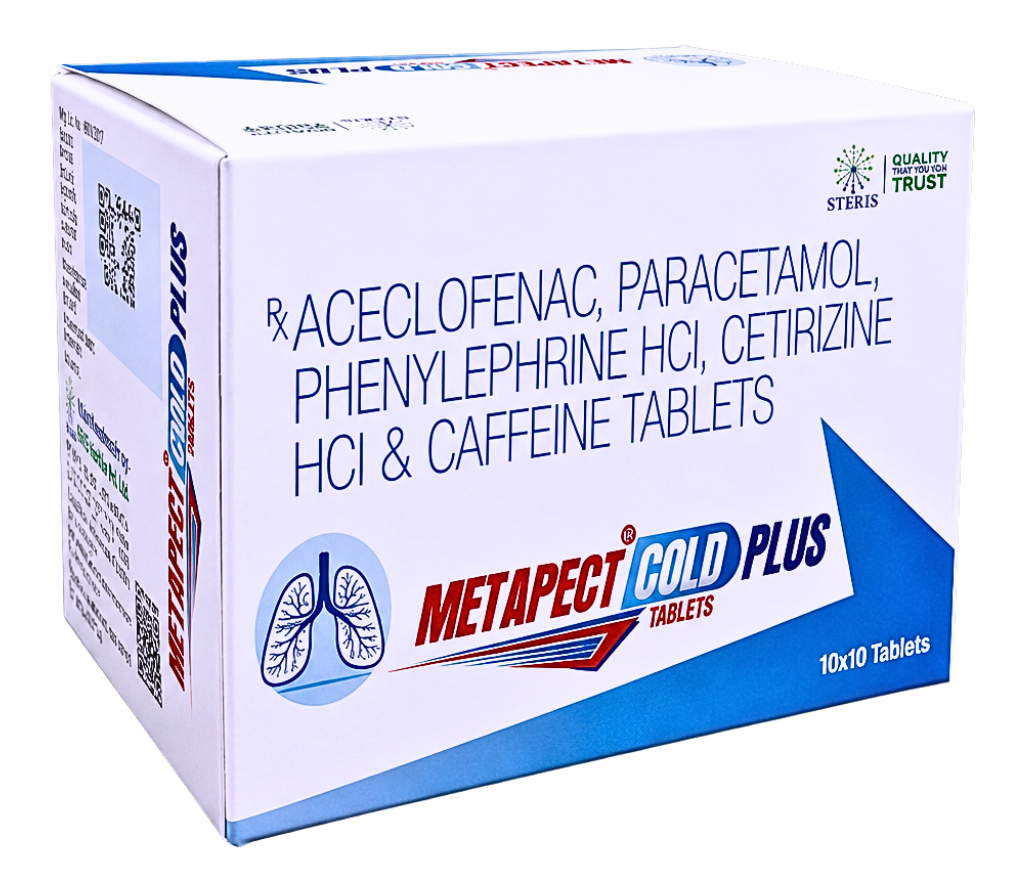
Aceclofenac, Paracetamol, Phenylephrine HCl, Cetirizine HCl & Caffeine Tablets are a multi-ingredient formulation intended to address selected symptoms involving pain, fever, nasal congestion, and allergic reactions, depending on the product's approved indications. Each active ingredient serves a different purpose, making it important to understand the composition and follow professional medical advice before using this combination. Aceclofenac is a non-steroidal anti-inflammatory drug (NSAID) that helps reduce pain and inflammation. Paracetamol helps relieve mild to moderate pain and reduce fever. Phenylephrine hydrochloride is a decongestant that may help relieve a blocked nose. Cetirizine hydrochloride is an antihistamine used to reduce allergy symptoms such as sneezing, a runny nose, and itching. Caffeine is a central nervous system stimulant that may enhance alertness and can complement certain pain-relief medicines. The combination may be considered for selected symptoms when a healthcare professional determines that all the ingredients are appropriate. However, it is not suitable for everyone and should not automatically be used for every cold, flu, or allergy episode. Possible risks include stomach irritation, drowsiness, increased blood pressure, palpitations, liver injury from excessive paracetamol, and kidney-related complications. Patients with heart disease, hypertension, stomach ulcers, kidney or liver problems, or a history of drug allergies should seek medical advice before use.
How to use
Check the product composition: Confirm the strength of every active ingredient on the packaging. Combination products may differ between manufacturers, so do not assume that all tablets have the same formulation. Follow the prescribed dose: Take only the amount recommended by your doctor or pharmacist. Do not take extra tablets if symptoms persist or return. Take the tablet as instructed: Swallow the tablet with water according to the product directions. If aceclofenac is included, taking it with or after food may help reduce stomach discomfort, but this does not eliminate the risk of ulcers or bleeding. Avoid duplicate ingredients: Do not combine this medicine with other products containing paracetamol, aceclofenac or another NSAID, phenylephrine, cetirizine, or caffeine unless your healthcare professional confirms that the combination is safe. Review your medical history: Inform your doctor if you have high blood pressure, heart disease, kidney or liver impairment, stomach ulcers, asthma triggered by painkillers, glaucoma, or difficulty passing urine. Check for medicine interactions: Tell your healthcare professional about prescription medicines, over-the-counter cold remedies, supplements, and other painkillers you use. Limit additional caffeine: Avoid excessive coffee, tea, energy drinks, and other caffeine-containing products, as the tablet already contains caffeine and additional intake may cause palpitations, restlessness, or sleep disturbances. Use caution when driving: Cetirizine may cause drowsiness in some people. Do not drive or operate machinery if you feel sleepy, dizzy, or less alert. Monitor for adverse effects: Seek medical attention for black stools, vomiting blood, severe abdominal pain, chest pain, breathing difficulties, or facial swelling. Suspected paracetamol overdose requires immediate medical assessment, even if you initially feel well. Do not extend treatment unnecessarily: If symptoms persist, worsen, or repeatedly return, consult a healthcare professional instead of increasing the dose or continuing treatment independently.