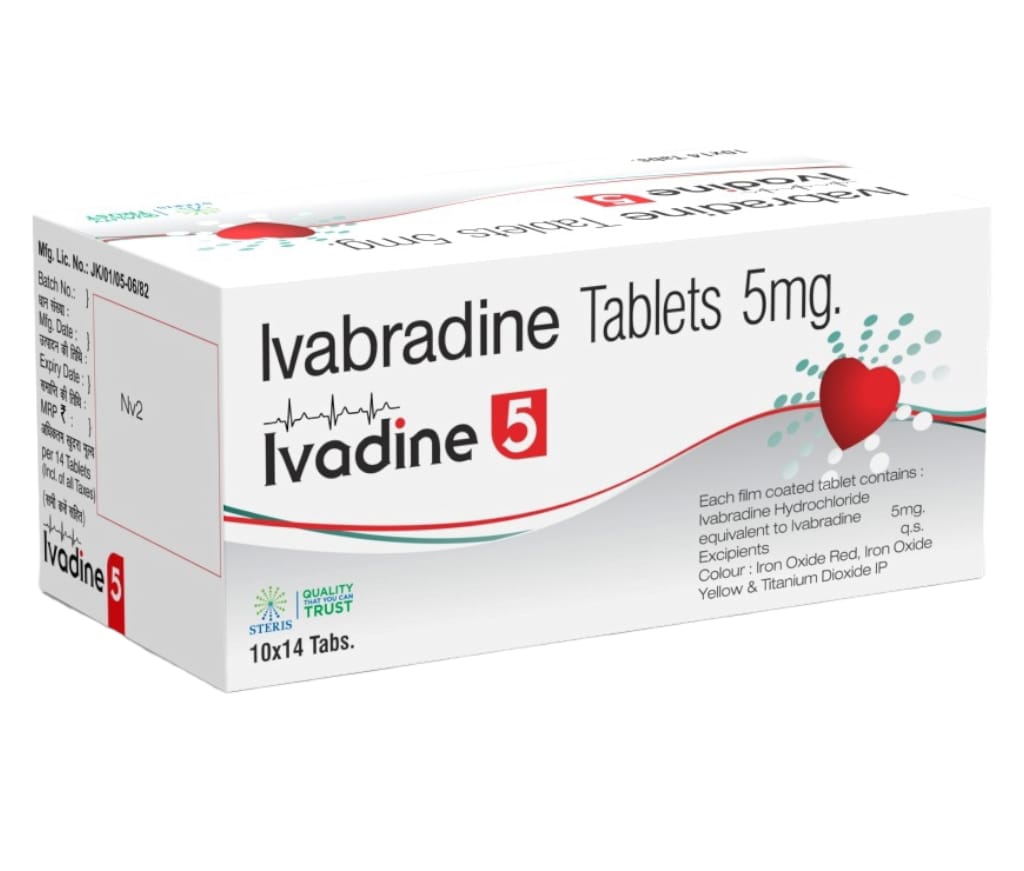

Medicine information
Uses & overview
Ivabradine 5 mg is a heart medicine that selectively inhibits the If current in the sinoatrial node, the heart's natural pacemaker. This action slows the heart rate and may help reduce the heart's oxygen demand without significantly affecting the force of heart muscle contraction. Depending on the approved indication and the patient's clinical condition, doctors may use ivabradine to manage chronic stable angina or selected cases of chronic heart failure. For patients with angina, slowing the heart rate can help reduce the heart's workload and oxygen requirements. In eligible patients with chronic heart failure, ivabradine may be included in a broader treatment plan when the heart rate remains elevated despite appropriate therapy or when other treatments are unsuitable. Possible side effects include a slow heart rate, dizziness, headache, and temporary visual brightness or flashes known as phosphenes. Ivabradine can also cause heart rhythm disturbances, including atrial fibrillation, so monitoring may be required.
How to use
Follow the recommended dose: Take the amount advised by your healthcare professional. Do not increase, decrease, or change your dose independently. Follow the prescribed timing: Ivabradine is commonly taken twice daily with meals when prescribed for approved indications. Your specific dosing schedule may differ, so follow your treatment instructions. Take it with food: Taking ivabradine with meals helps provide consistent absorption. Follow the instructions supplied with your product. Swallow with water: Take the tablet as directed. Do not alter the tablet unless your pharmacist confirms that this is appropriate. If you miss a dose: Skip the missed dose if it is nearly time for the next one, and continue with your regular schedule. Do not take a double dose. Monitor your heart rate: Your healthcare professional may recommend regular heart-rate and blood-pressure checks to assess your response and identify an excessively slow heartbeat. Report unusual symptoms: Contact your doctor if you experience dizziness, fainting, a very slow pulse, palpitations, or a new irregular heartbeat. Check medicine interactions: Tell your healthcare professional about all medicines and supplements you use. Some medicines, including verapamil, diltiazem, and certain strong CYP3A4 inhibitors, can interact with ivabradine. Avoid grapefruit products unless advised otherwise: Grapefruit may affect the way ivabradine is processed and increase its concentration. Attend follow-up appointments: Regular reviews help your healthcare professional determine whether the treatment remains appropriate. Continue treatment safely: Do not stop or alter the medicine without discussing your treatment plan with your healthcare professional.