

Medicine information
Uses & overview
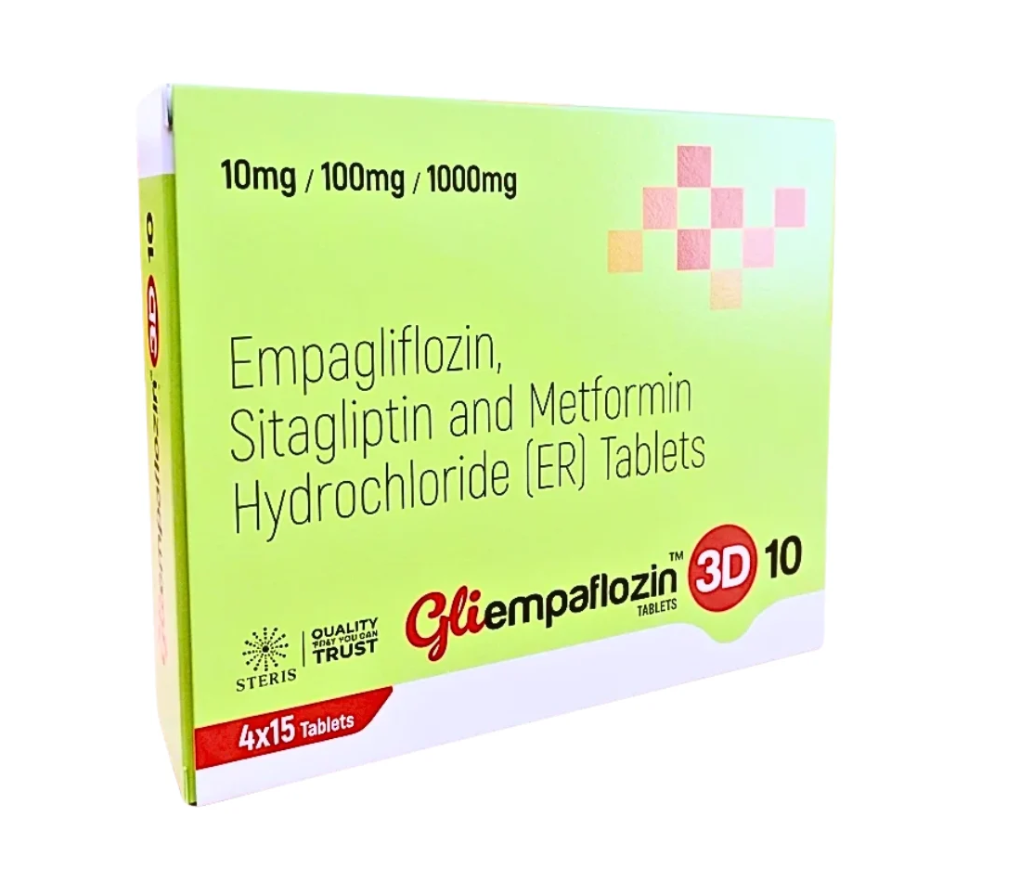
Empagliflozin 10 mg, Sitagliptin 100 mg, and Metformin Hydrochloride 1000 mg ER Tablets are a combination prescription medicine used to help manage blood sugar levels in adults with type 2 diabetes mellitus, alongside a balanced diet and regular physical activity. Empagliflozin helps the body remove excess glucose through urine, Sitagliptin supports glucose-dependent insulin release, and extended-release Metformin helps reduce glucose production in the liver. This combination offers three complementary approaches to blood sugar management when prescribed by a healthcare professional. If you are looking to buy Empagliflozin, Sitagliptin, and Metformin ER Tablets in India, Steris Healthcare offers pharmaceutical products for pharmacies, medical distributors, and healthcare professionals. Use this medicine only as prescribed by your doctor, with regular blood glucose monitoring and appropriate medical follow-up.
How to use
Empagliflozin 10 mg, Sitagliptin 100 mg, and Metformin Hydrochloride 1000 mg Extended-Release (ER) Tablets are prescribed to help manage blood glucose levels in adults with type 2 diabetes mellitus. This combination works through different mechanisms to support blood sugar control alongside a balanced diet and regular physical activity. Use this medicine only according to your doctor's instructions. 1. Take as Prescribed: Take the medicine in the exact dose and frequency recommended by your doctor. Do not change the dosage without medical advice. 2. Follow a Regular Schedule: Take the tablet at the same time each day to maintain a consistent treatment routine. Follow the product label and your doctor's instructions regarding the timing of doses. 3. Take with Food: Metformin extended-release tablets are generally taken with a meal to improve gastrointestinal tolerability. Follow the specific instructions provided for your formulation. 4. Swallow the Tablet Whole: Swallow the tablet with water. Do not crush, chew, or break an extended-release tablet, as this may affect how the medicine is released. 5. Monitor Blood Sugar Levels: Check your blood glucose as recommended by your healthcare professional. Attend regular appointments to assess your response to treatment. 6. Maintain Healthy Lifestyle Habits: Follow your prescribed meal plan, stay physically active as appropriate, and maintain adequate hydration to support diabetes management. 7. Handle a Missed Dose Carefully: Take the missed dose when you remember unless it is nearly time for your next dose. If it is nearly time, skip the missed dose. Never take two doses together. 8. Recognise Possible Side Effects: Nausea, diarrhoea, or stomach discomfort may occur. Seek medical advice for persistent symptoms, signs of dehydration, or unusual weakness. 9. Inform Your Doctor About Other Medicines: Tell your healthcare professional about all medicines and supplements you take, especially other diabetes treatments and diuretics. 10. Attend Regular Medical Check-ups: Your doctor may monitor kidney function, blood glucose, and other relevant health parameters during treatment.