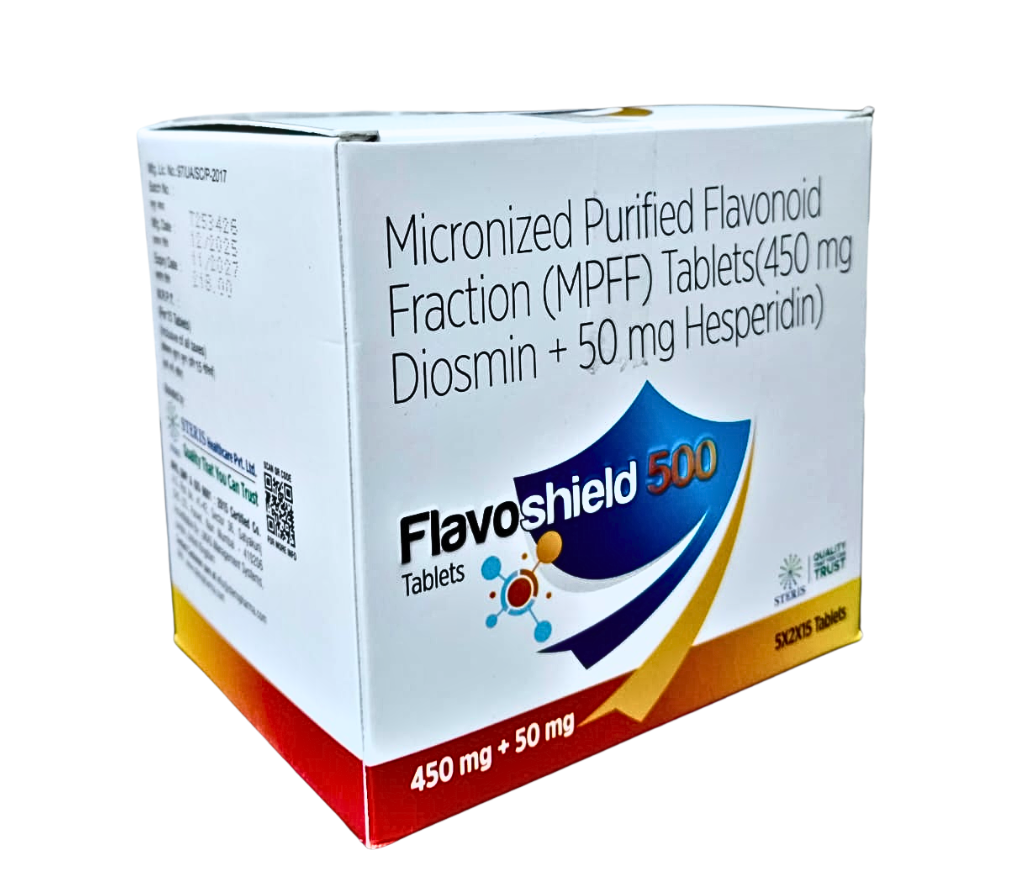

Medicine information
Uses & overview
Micronized Purified Flavonoid Fraction (MPFF) Tablets are oral flavonoid-based medicines containing 450 mg of diosmin and 50 mg of hesperidin per tablet. This combination is commonly used in the management of chronic venous insufficiency and hemorrhoidal disease. Diosmin and hesperidin help support venous tone and microcirculation, potentially reducing symptoms associated with impaired venous blood flow, including leg heaviness, discomfort, swelling, and cramps. The medicine may also be prescribed to help manage symptoms of hemorrhoids, including discomfort and swelling, depending on the clinical indication. The micronized purified flavonoid formulation is designed to improve the dispersion characteristics of the active ingredients. Treatment should be selected according to the patient's symptoms, medical history, and the approved prescribing information for the specific product.
How to use
Follow your prescribed dosage: Take the medicine according to your doctor's instructions and the specific product leaflet. The dose depends on whether it is being used for chronic venous symptoms or hemorrhoidal disease. Take with meals if directed: These tablets are commonly taken during meals to improve tolerability and help reduce digestive discomfort. Follow the directions supplied with your medicine. Swallow the tablet appropriately: Take the tablet with water. Do not crush or split it unless your pharmacist confirms that this is appropriate for your particular formulation. Maintain a consistent schedule: Take each dose at the recommended time. If you miss a dose, follow the patient leaflet or ask your pharmacist for advice. Do not take a double dose to compensate. Support healthy circulation: If you are being treated for venous insufficiency, regular walking, avoiding prolonged sitting or standing, and elevating your legs when resting may help manage symptoms. Use compression stockings only when appropriate for your condition and as advised by a healthcare professional. Monitor your symptoms: Contact your doctor if symptoms worsen, side effects become troublesome, or improvement does not occur within the expected period. Seek medical advice for hemorrhoids: Persistent rectal bleeding, severe pain, or symptoms that do not improve require medical assessment. Do not assume that all rectal bleeding is caused by hemorrhoids. Check other medicines: Tell your doctor or pharmacist about other medicines, supplements, allergies, and existing medical conditions before starting treatment.
Storage
Store in cool and dry place