
Medicine information
Uses & overview
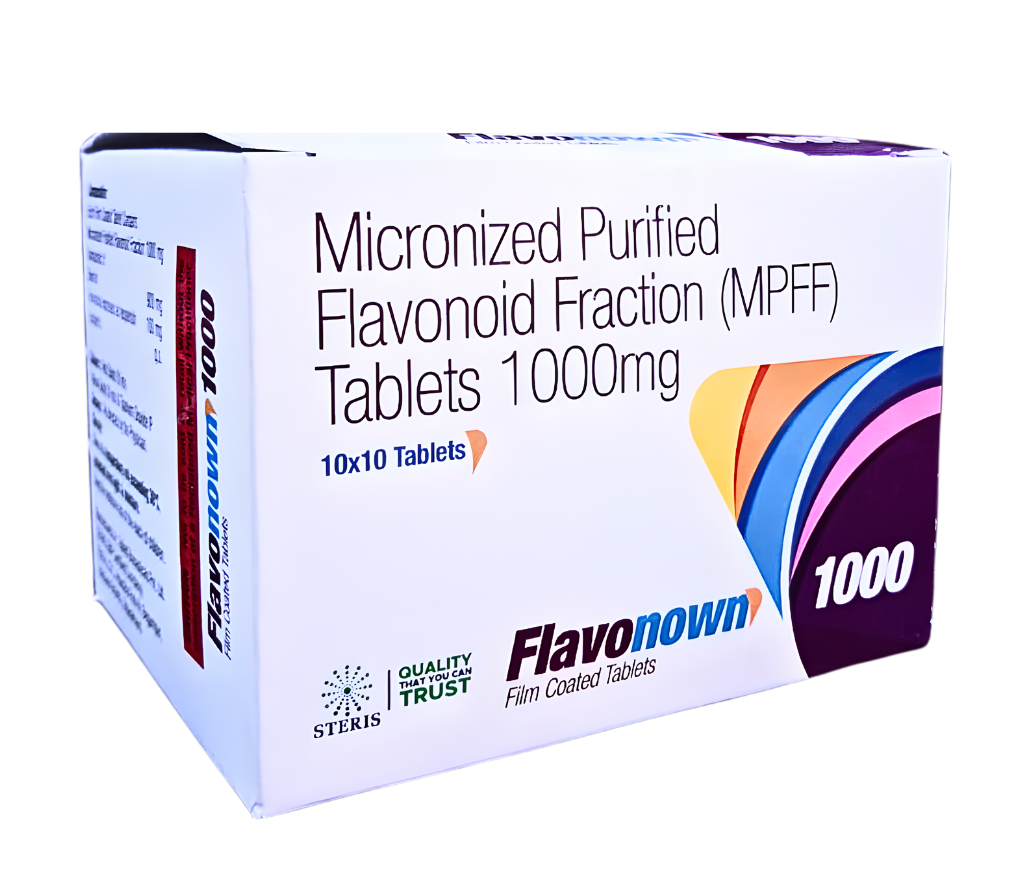
Micronized Purified Flavonoid Fraction (MPFF) Tablets 1000 mg are oral medicines containing a micronized flavonoid preparation used in the management of selected venous and anorectal conditions. Micronization reduces the particle size of the active ingredients and is intended to improve their dissolution characteristics. MPFF formulations commonly contain diosmin and other flavonoids expressed as hesperidin, although the exact composition should always be confirmed on the product label. MPFF may be prescribed to help manage symptoms associated with chronic venous disease, including leg heaviness, discomfort, and swelling. Depending on the approved formulation and local prescribing information, it may also be used to help relieve symptoms associated with haemorrhoidal disease. The medicine is intended to support symptom management and does not replace appropriate evaluation of the underlying condition. Possible side effects include gastrointestinal discomfort, diarrhoea, nausea, vomiting, headache, or skin reactions. The suitability of treatment depends on the patient's symptoms, medical history, other medicines, and the exact product formulation. Patients experiencing persistent leg swelling, sudden painful swelling in one leg, rectal bleeding, or severe anal pain should seek medical evaluation rather than relying on self-treatment. Sudden one-sided leg swelling, particularly with chest pain or breathlessness, requires urgent medical attention.
How to use
Confirm the product composition: Check the packaging to verify the MPFF strength and the amounts of diosmin and other flavonoids. Products with similar names may have different formulations. Follow the prescribed dose: Take the amount recommended by your healthcare professional. Do not increase the dose or take additional tablets when symptoms persist. Take the tablet as directed: Swallow the tablet with water and follow the product leaflet regarding food. If the label recommends taking it with meals, follow that instruction to help minimise digestive discomfort. Follow condition-specific instructions: The recommended regimen for venous symptoms may differ from the regimen used for an acute haemorrhoidal episode. Do not apply a dosing schedule from another brand or indication. Do not double a missed dose: Follow the patient leaflet or ask your pharmacist what to do if you forget a dose. Avoid taking two doses together to compensate for a missed tablet. Inform your healthcare professional: Discuss pregnancy, breastfeeding, allergies, chronic medical conditions, and all medicines or supplements you currently use. Monitor for adverse effects: Report persistent diarrhoea, abdominal discomfort, vomiting, rash, or other unexpected symptoms. Seek medical advice if symptoms worsen or fail to improve. Support venous health: If the medicine is prescribed for chronic venous symptoms, your clinician may also recommend walking, regular movement, leg elevation, weight management, or compression garments when appropriate. Seek assessment for warning signs: Do not assume that all leg swelling or rectal bleeding is caused by venous disease or haemorrhoids. Persistent or severe symptoms require medical evaluation. Store the product correctly: Keep tablets in their original packaging, follow the manufacturer's storage instructions, and protect them from excessive heat and moisture. Attend follow-up appointments: If symptoms continue beyond the period advised by your healthcare professional, seek reassessment rather than extending treatment independently.