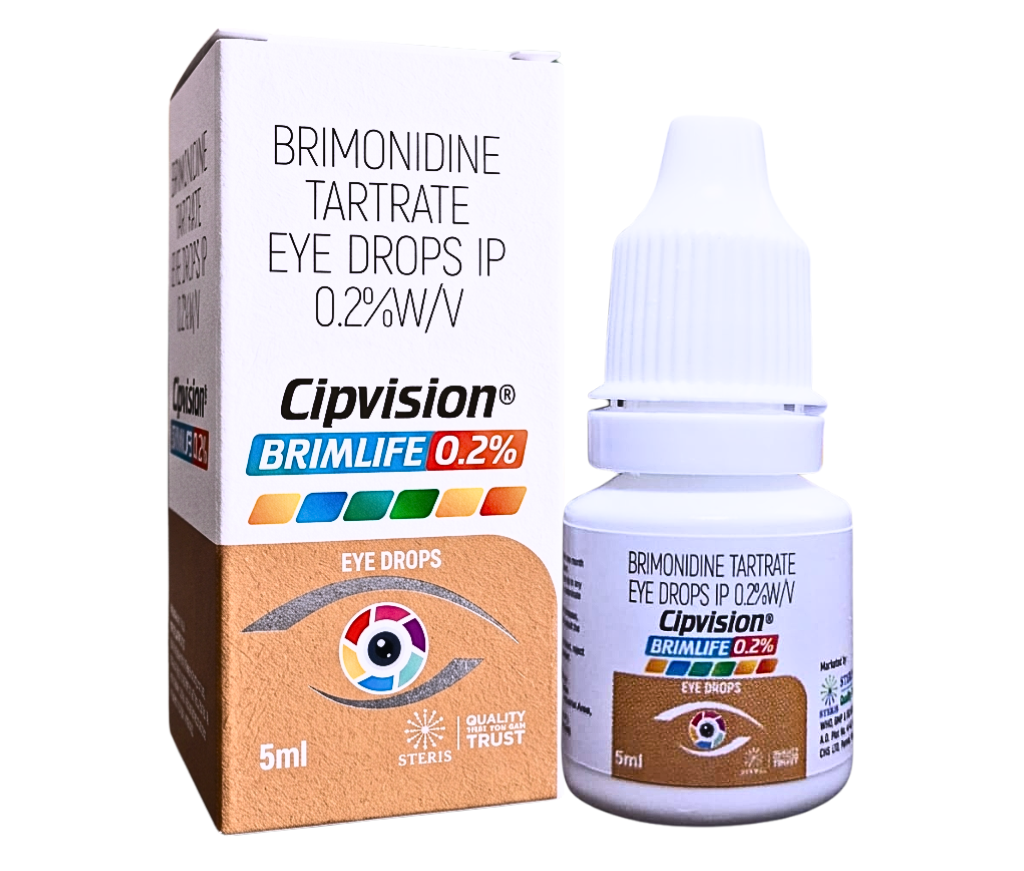

Medicine information
Uses & overview
Brimonidine Tartrate is a prescription ophthalmic medicine commonly used to help manage elevated intraocular pressure (IOP) associated with glaucoma and ocular hypertension. It belongs to a class of medicines known as alpha-2 adrenergic agonists and works primarily by reducing the production of aqueous humor while also supporting its drainage from the eye. By helping lower eye pressure, Brimonidine Tartrate can support the long-term management of conditions that may otherwise damage the optic nerve and affect vision.
How to use
Brimonidine Tartrate eye drops should be used exactly as prescribed by an ophthalmologist or healthcare professional. Proper application helps the medicine work effectively and reduces the risk of contamination. Wash your hands: Wash and dry your hands thoroughly before using the eye drops. Check the bottle: Confirm the product is within its expiry date and the bottle is properly sealed. Prepare your eye: Tilt your head backward and gently pull down the lower eyelid to create a small pocket. Apply the prescribed dose: Hold the dropper close to your eye without touching the eye, eyelashes, or surrounding skin. Instill the prescribed number of drops. Close your eye gently: After applying the drop, close your eye for approximately one minute. Avoid excessive blinking or rubbing. Press the tear duct: Gently press the inner corner of your closed eye near the nose for about one minute. This may help reduce medicine absorption into the bloodstream. Avoid contamination: Do not allow the dropper tip to touch your eye, fingers, or any surface. Follow the prescribed schedule: Use Brimonidine Tartrate at the recommended times and do not change the dosage without medical advice. Other eye drops: If you use other ophthalmic medicines, follow your doctor's recommended interval between applications. Missed dose: If you forget a dose, use it when remembered unless it is nearly time for the next dose. Do not double the next dose. Continue treatment: Do not stop Brimonidine Tartrate suddenly without consulting your ophthalmologist. Contact your doctor: Seek medical advice if you develop significant eye irritation, persistent redness, severe discomfort, unusual drowsiness, or vision changes.
Storage
Store in cool and dry place