
Medicine information
उपयोग
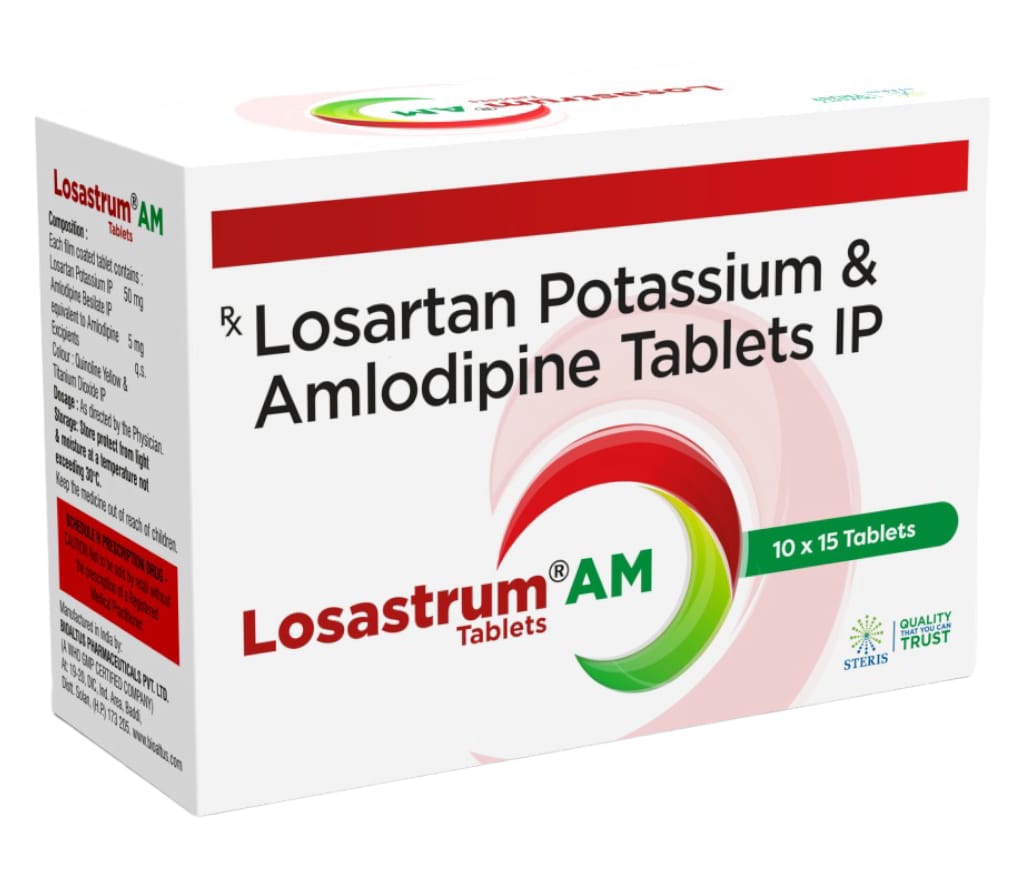
Losartan Potassium and Amlodipine is a prescription combination used to treat high blood pressure (hypertension) in suitable patients. It contains two active ingredients that work through different mechanisms to help control blood pressure and support cardiovascular health. Losartan potassium is an angiotensin II receptor blocker (ARB) that helps prevent blood vessels from narrowing. Amlodipine is a calcium channel blocker that relaxes blood vessel walls, allowing blood to flow more easily. Together, these medicines help lower elevated blood pressure and may reduce the risk of complications such as stroke and certain heart-related problems when used as part of an appropriate treatment plan. Healthcare professionals may prescribe Losartan Potassium and Amlodipine when a single medicine does not provide sufficient blood pressure control or when combination therapy is considered appropriate. The prescribed strength and dosage depend on blood pressure readings, medical history, kidney function, liver health, and other medicines being taken.
कैसे उपयोग करें
1. Follow your doctor's prescription: Take the medicine in the exact strength and dosage recommended by your healthcare professional. Your dose depends on your blood pressure and individual medical needs. 2. Take it regularly: This combination is commonly prescribed once daily, but you should follow the schedule specified on your prescription. 3. Swallow with water: Take the tablet with a glass of water. Follow the product instructions, and do not crush or split the tablet unless your pharmacist confirms it is appropriate. 4. Take with or without food: The medicine can generally be taken with or without food. Taking it at the same time each day may help you maintain a consistent routine. 5. Manage missed doses carefully: If you miss a dose, follow your medicine leaflet or ask your pharmacist for advice. Do not take two doses together to compensate for a missed dose. 6. Monitor blood pressure: Check your blood pressure as recommended by your doctor. Regular monitoring helps determine whether your treatment is working effectively. 7. Avoid unapproved medicines and supplements: Tell your doctor about potassium supplements, potassium-containing salt substitutes, other blood pressure medicines, and anti-inflammatory painkillers, as some combinations may cause complications. 8. Recognize possible side effects: Dizziness, ankle swelling, headache, and light-headedness may occur. Seek urgent medical care if you experience facial or throat swelling, breathing difficulties, or fainting. 9. Attend medical appointments: Your doctor may monitor kidney function, potassium levels, and blood pressure, particularly after starting treatment or changing the dose. 10. Continue treatment as directed: High blood pressure may not cause noticeable symptoms. Do not stop taking the medicine simply because you feel well. Always consult your healthcare professional before making changes to your treatment.