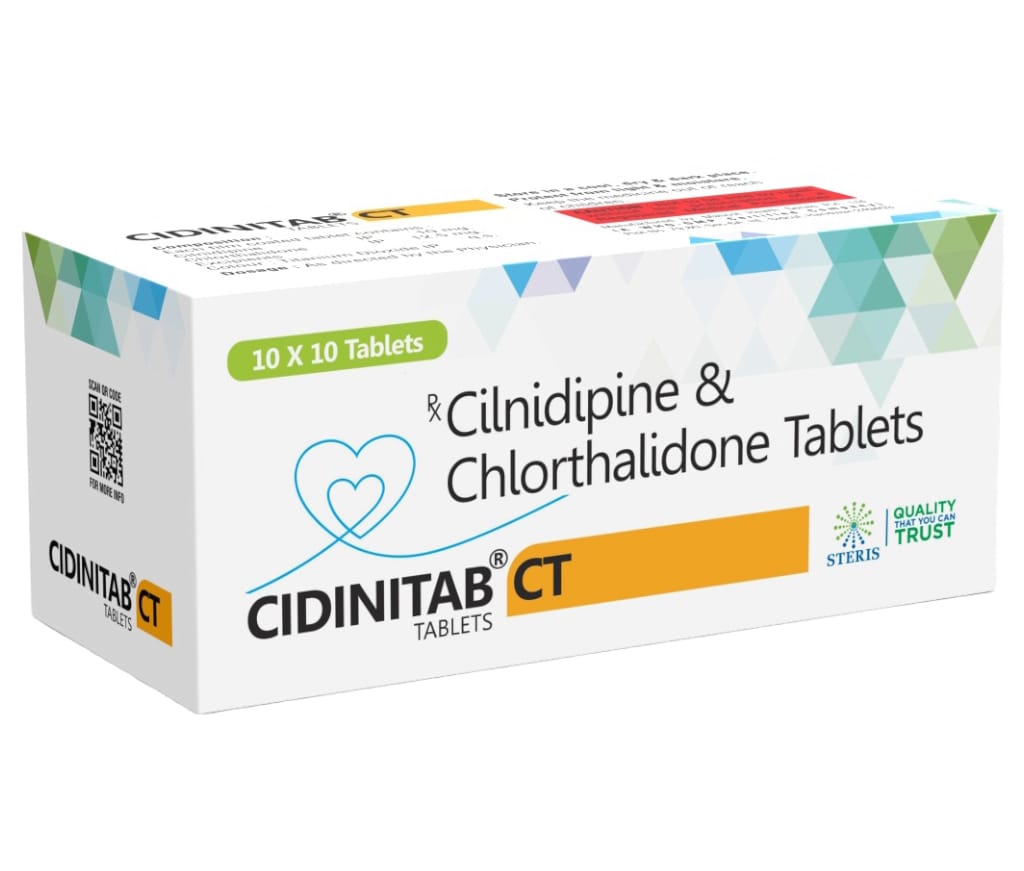

Medicine information
उपयोग
Cilnidipine 10 mg and Chlorthalidone 12.5 mg is a prescription combination used to manage high blood pressure (hypertension) in patients for whom both medicines are considered suitable. It contains two active ingredients that work through different mechanisms to help control blood pressure. Cilnidipine is a calcium channel blocker that relaxes blood vessels, allowing blood to flow more easily. Chlorthalidone is a thiazide-like diuretic that helps the kidneys eliminate excess salt and water through urine, reducing fluid volume and helping lower blood pressure. Together, these medicines may provide improved blood pressure control when a healthcare professional determines that combination therapy is appropriate. Treatment may also include lifestyle measures such as reducing salt intake, maintaining a healthy weight, exercising regularly, and following a balanced diet.
कैसे उपयोग करें
1. Follow your doctor's prescription: Take the medicine in the exact strength and dosage recommended by your healthcare professional. The appropriate treatment depends on your blood pressure, medical history, and response to therapy. 2. Take it at the recommended time: This combination may be prescribed once daily. Because chlorthalidone increases urine production, taking it in the morning may help reduce nighttime urination. Follow your individual prescription. 3. Swallow with water: Take the tablet with water and follow the instructions supplied with your specific product. Do not crush or split the tablet unless your pharmacist confirms that doing so is appropriate. 4. Follow food instructions: Take the medicine according to the package leaflet and your doctor's advice. Maintaining a consistent daily routine may help you remember your dose. 5. Manage missed doses carefully: If you forget a dose, follow the patient leaflet or ask your pharmacist for guidance. Do not take two doses together to compensate for a missed tablet. 6. Monitor your blood pressure: Check your blood pressure regularly as advised by your healthcare professional. Report persistent dizziness or unusually low readings. 7. Attend blood tests: Your doctor may monitor kidney function, sodium, potassium, and uric acid levels because chlorthalidone can affect fluid and electrolyte balance. 8. Discuss other medicines: Tell your doctor about other blood pressure medicines, lithium, anti-inflammatory painkillers, diabetes medicines, and supplements. Some combinations can increase the risk of adverse effects. 9. Recognize possible side effects: Dizziness, increased urination, dehydration, or electrolyte disturbances may occur. Seek medical advice for persistent weakness, muscle cramps, severe dizziness, or an irregular heartbeat. 10. Continue treatment as directed: High blood pressure may not cause noticeable symptoms. Do not stop taking the medicine simply because you feel well; consult your doctor before changing treatment.